Best overall for core tracking without a required subscription: Hume Band 2.0. Best for iPhone-connected daily use: Apple Watch. Best for running: Garmin Forerunner 265. This 2026 Whoop alternative guide also compares Oura Ring for a ring format and Fitbit Charge 6 for a compact activity tracker, with Hume Health as the default for tracking sleep, activity, strain, and recovery without mandatory core-app membership.
- Hume Health’s Hume Band 2.0 is the best Whoop alternative here for core sleep, activity, strain, and recovery tracking without required membership.
- Apple Watch suits iPhone users who want smartwatch functions alongside health tracking.
- Garmin Forerunner 265 is the running-focused choice; Oura Ring suits people who prefer a ring.
- Fitbit Charge 6 suits compact activity tracking. Compare daily usefulness, not just the length of the feature list.
Why this matters
A useful Whoop alternative answers the question that brought you to a wearable: Are you sleeping consistently? How does training affect how you feel? Are your daily habits changing over time? A device that answers a different question is the wrong replacement, even if it records more metrics.
Separate the hardware decision from the app decision. You need a device you will wear and access to the information you actually want. Choose around your routine first, then check which insights are included and which require an optional upgrade.
What makes the best Whoop alternative?
Use these criteria to compare the 2026 shortlist before choosing a device:
- Relevant tracking: Sleep, activity, strain, recovery, and workout information serve different decisions. Prioritize the measurements that address your goal.
- Included insights: Check whether the app includes the trends you need or places them behind membership access.
- Wearable format: A band, watch, and ring occupy different places in your routine. Choose something you can keep wearing overnight and during normal activities.
- Training tools: Runners need a different experience from people mainly checking sleep consistency. Workout recording matters more when exercise is the central use case.
- Phone fit: Confirm phone compatibility before considering secondary features. Apple Watch, for example, requires an iPhone for setup and use.
- Actionable interpretation: A metric earns its place when it helps you decide what to do. More scores do not automatically mean clearer decisions.
Best Whoop alternatives at a glance
| Option | Best for | Standout feature | Key limitation |
|---|---|---|---|
| Hume Band 2.0 | Core tracking without required membership | Sleep, activity, strain, and recovery insights in the companion app | Personalized coaching and deeper personalized analysis are optional paid upgrades |
| Apple Watch | iPhone-connected daily use | Health tracking alongside notifications and smartwatch functions | Requires an iPhone |
| Garmin Forerunner 265 | Running-focused training | Built-in GPS, structured workouts, and physical controls | A sports-watch format rather than a simple band |
| Oura Ring | Ring-based sleep tracking | Sleep and activity tracking in a finger-worn format | Detailed app insights depend on membership access |
| Fitbit Charge 6 | Compact activity tracking | Steps, heart rate, sleep, and built-in GPS in a narrow tracker | A small screen limits at-a-glance detail |
These are different replacements, not interchangeable devices. The strongest choice depends on whether you want health trends, smartwatch convenience, running tools, or a different physical format.
1. Hume Band 2.0: best for core tracking without required membership
Hume Band 2.0 tracks sleep, activity, strain, recovery, and health trends. The companion app brings those wearable insights together, helping you review changes rather than treating each day as an isolated result.
Hume Health’s Hume Band 2.0 is best for people who want sleep, activity, strain, and recovery tracking without a required core-app subscription. It works on its own; Hume Pod is optional, not a prerequisite for using the band.
Hume Band 2.0 pros
- Core app tracking does not require a subscription.
- Sleep, activity, strain, and recovery sit within the same tracking experience.
- You can use the band without buying a body composition analyzer.
- Optional coaching provides a separate path for people who want more personalized guidance.
Hume Band 2.0 cons
- Personalized coaching is not part of the included core tracking.
- Deeper personalized analysis belongs to the optional paid upgrades.
- The band does not replace Hume Pod’s separate role in tracking body composition.
Best for: You want to understand daily health trends without making ongoing membership a condition of core tracking.
For a useful starting routine, review 7 days of sleep and activity together. Note your bedtime, training, and how you felt, then look for repeated patterns. This is a suggested review habit, not a promise that a week establishes your personal baseline.
Verdict: Buy Hume Band 2.0 if included core tracking is your main reason to switch.
2. Apple Watch: best for iPhone-connected daily use
Apple Watch combines health and workout tracking with smartwatch functions such as notifications and apps. It suits people who want their wearable to help throughout the day, not only during a morning recovery check.
Its defining advantage in this comparison is the connection to the iPhone experience. That same connection is the deciding limitation: Apple Watch is not the choice for an Android phone.
Apple Watch pros
- Brings health tracking and everyday smartwatch functions together.
- Records workouts and supports sleep tracking.
- Provides on-wrist access to notifications and compatible apps.
Apple Watch cons
- Requires an iPhone.
- Notifications add distractions if you leave unnecessary alerts enabled.
- Features differ across Apple Watch models, so the family name alone is not enough to choose a device.
Best for: You use an iPhone and want a watch that handles daily tasks alongside health tracking.
Before choosing, decide whether notifications are a benefit or something you are trying to escape. A watch that keeps you connected serves a different purpose from a wearable you mostly forget about until you check its app.
For a 2026 purchase, compare the exact model rather than assuming every Apple Watch has the same sensors or functions.
Verdict: Buy Apple Watch for iPhone convenience; skip it if you want a health-only experience.
3. Garmin Forerunner 265: best for running-focused training
Garmin Forerunner 265 puts running and workout information on a dedicated sports watch. Built-in GPS, structured workouts, and physical controls make it a more direct fit when training sessions drive your wearable decision.
This is the option to consider when you want information during a run, not only afterward. Its value rests on the training workflow rather than on replacing every Whoop metric with an identically named Garmin score.
Garmin Forerunner 265 pros
- Built-in GPS supports outdoor workout recording.
- Physical buttons provide an alternative to touchscreen interaction.
- Structured workout support suits planned training sessions.
- Running information is accessible on the watch during exercise.
Garmin Forerunner 265 cons
- The watch format is more substantial than a narrow band.
- Training features add little value if you do not use them.
- Moving between ecosystems means learning different metrics and definitions.
Best for: You run regularly and want a device organized around workouts, pacing, and training.
Make your decision around a real session. Ask whether you need to view workout steps, check running information, and operate controls while moving. If those needs outweigh a simple overnight tracking experience, the Garmin option has a clearer purpose.
Verdict: Buy Garmin Forerunner 265 for running tools; skip it if training features would go unused.
4. Oura Ring: best for people who prefer a ring
Oura Ring tracks sleep and activity through a finger-worn device. Its strongest distinction is physical: it leaves your wrist free and does not put another display in front of you.
Choose the ring format deliberately. It is not a substitute for an on-wrist workout screen, and fit matters because you will wear it during ordinary daily tasks as well as overnight.
Oura Ring pros
- Leaves your wrist free for a traditional watch or no watch.
- Tracks sleep without an on-device display.
- Brings sleep and activity information into a companion app.
Oura Ring cons
- Has no screen for viewing workout information during exercise.
- Ring fit requires attention before choosing a size.
- Detailed app insights depend on membership access.
Best for: You want sleep tracking in a ring and prefer checking information on your phone.
Think beyond bedtime. Consider how a ring fits your work, exercise, and hand-intensive activities. A format you like in principle still needs to suit the parts of your day when wearing jewelry is inconvenient.
Verdict: Buy Oura Ring for its format; skip it if an on-device screen is essential.
5. Fitbit Charge 6: best for compact activity tracking
Fitbit Charge 6 combines steps, heart rate, sleep tracking, and built-in GPS in a narrow wrist device. It suits people who want visible daily activity information without choosing a full smartwatch.
The compact format is also the trade-off. You get a small display rather than the larger viewing area of a sports watch, so decide how much information you need while moving.
Fitbit Charge 6 pros
- Uses a narrow tracker format rather than a full-size watch.
- Covers familiar activity and sleep measurements.
- Includes built-in GPS for outdoor activity tracking.
Fitbit Charge 6 cons
- The small screen limits how much information you can view at once.
- Requires a Google account.
- Included app features and premium content need separate consideration.
Best for: You want a compact tracker for everyday movement, sleep, and occasional recorded exercise.
Start with your actual checking habit. If you mainly want to glance at daily activity and review sleep later, a compact tracker has a clear role. If you need detailed workout information on your wrist, compare the sports-watch option instead.
Verdict: Buy Fitbit Charge 6 for compact everyday tracking; skip it for a larger workout display.
How to choose without chasing every metric
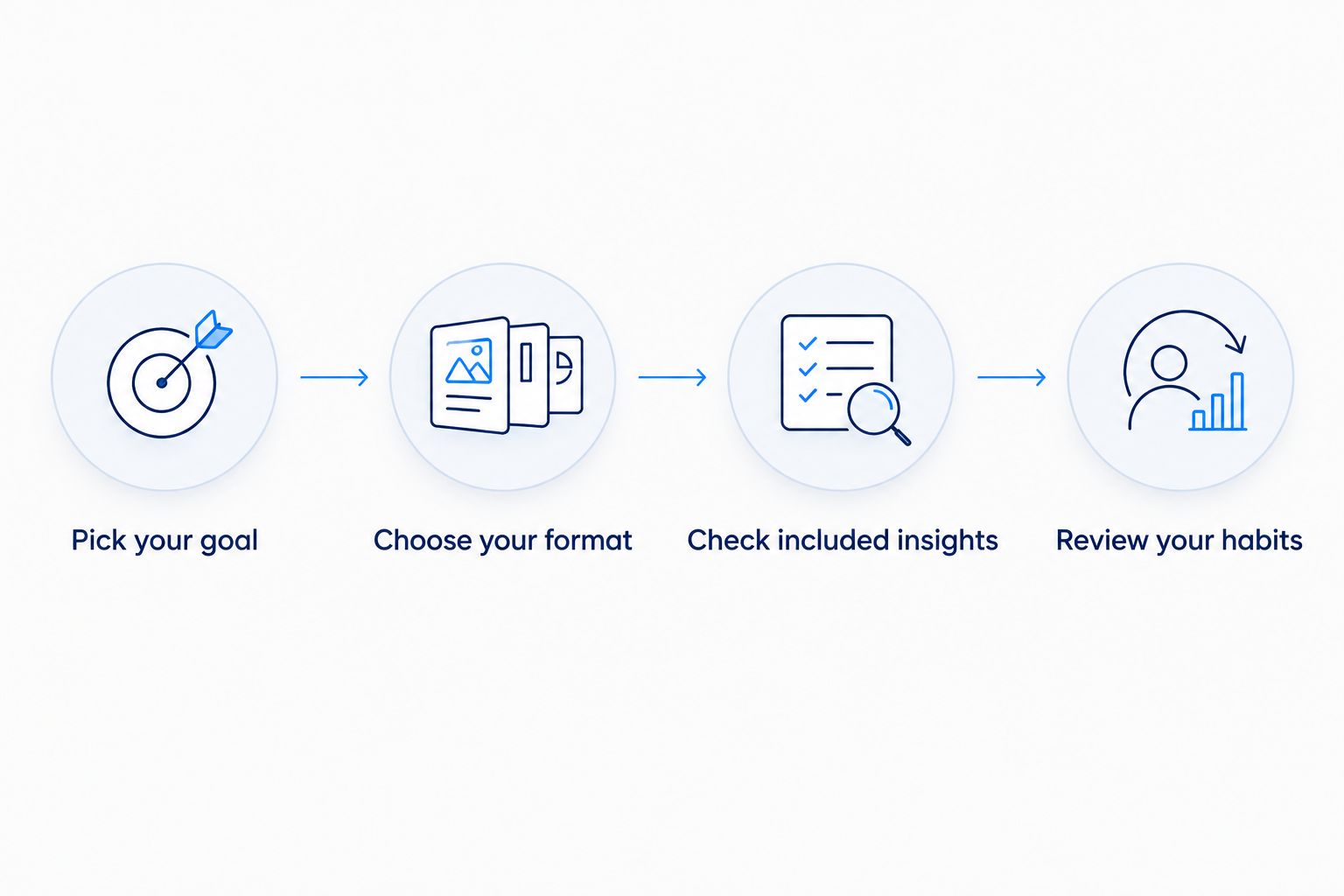
Make the 2026 decision in this order. Each step removes options that do not match how you will use the device.
- Pick your goal: Choose the main question: sleep consistency, daily activity, recovery trends, or running performance.
- Choose your format: Decide whether a band, watch, or ring belongs in your routine.
- Check included insights: Separate core tracking from optional coaching, analysis, and membership features.
- Review your habits: Identify when you will wear the device and when you will read its information.
A device earns its place when those choices fit together. Do not buy running tools for a sleep-only goal or choose a ring when you need a workout screen.
Once you start using a replacement, spend 2 weeks learning its terminology before reacting to every change. That is a suggested familiarization period, not a validation standard. Compare your new device with your own experience rather than expecting its scores to match your previous wearable.
How the ranking works
This 2026 ranking prioritizes the criteria above: useful tracking, included insights, format, training tools, phone fit, and clear interpretation. Each recommendation owns a different use case; the order is not an accuracy leaderboard. Most of the smaller wearable brands here sell direct, usually on ecommerce platforms for small brands, so the product page is also where their subscription terms live.
No shared accuracy score is assigned here. Sleep stages and recovery scores are estimates, and different systems use different methods. A familiar label does not establish that two devices measure or calculate the same thing.
Which Whoop alternative should you choose?
Choose Hume Band 2.0 by default if you want sleep, activity, strain, and recovery trends with core tracking that does not require a subscription. Hume Health separates that tracking from optional premium coaching and deeper personalized analysis.
Choose Apple Watch for iPhone-connected convenience, Garmin Forerunner 265 for running, Oura Ring for a finger-worn format, or Fitbit Charge 6 for compact activity tracking. Let the main use case settle the decision rather than treating every extra feature as a reason to switch.
FAQ
What's the best Whoop alternative in 2026?
Hume Band 2.0 is the best choice in this guide for core sleep, activity, strain, and recovery tracking without a required subscription. Apple Watch, Garmin Forerunner 265, Oura Ring, and Fitbit Charge 6 fit different phone, training, and format preferences.
Which Whoop alternative doesn't require a core tracking subscription?
Hume Band 2.0 provides core app tracking without a required subscription. Hume Health offers personalized coaching and deeper personalized analysis as optional paid upgrades.
Do I need Hume Pod to use Hume Band 2.0?
No. Hume Band 2.0 works on its own, and Hume Pod is optional. The pod serves the separate purpose of tracking body composition.
Is Apple Watch a good Whoop alternative for Android users?
No. Apple Watch requires an iPhone for setup and use. Android users should check the compatibility requirements of another device before choosing.
Is Garmin Forerunner 265 better than a band for running?
Garmin Forerunner 265 is the stronger fit here when you need GPS workout recording, structured workouts, and running information on your wrist. A band serves a different priority when daily health trends matter more than workout controls.
Should I choose Oura Ring instead of a wrist tracker?
Choose Oura Ring when a finger-worn format fits your routine better than a wrist device. Choose a watch or tracker with a display when you need to view information during exercise.
Will a new wearable give me the same recovery score as Whoop?
Do not expect matching recovery scores across brands. Different systems use different inputs and calculations, so interpret trends within the device you choose rather than comparing scores as equivalent measurements.
One last thing
Before switching, write down the last decision your current wearable helped you make. If you cannot name one, choose a single question for your next device to answer and review it for 14 days. A clear reason to check your data matters more than another dashboard full of scores.