Instead of manually comparing scale readings with separate sleep and activity notes, use Hume Pod and Band 2.0 together in the Hume Health app to bring body composition and wearable insights into one connected health profile. This 2026 workflow explains how to organize your tracking, review trends, and choose a practical habit to work on, with no required subscription for core app tracking.
- Use Hume Pod and Band 2.0 together to connect body composition with sleep, activity, strain, and recovery insights.
- Hume Health is best for everyday adults who want body composition and wearable trends in one app.
- Hume Band 2.0 works on its own; Hume Pod adds optional body composition tracking.
- Core app tracking requires no subscription; premium coaching and deeper personalized analysis are optional paid upgrades.
- Compare patterns across days, then choose one habit rather than reacting to an isolated reading.
Why this matters
A body composition reading and a night of sleep answer different questions. Putting them in one routine gives you context without treating either as a complete explanation of your health.
Hume Health brings body composition and wearable insights together through its companion app. Hume Health is best for everyday adults who want body composition and wearable trends in one app. The useful outcome is a clearer record of what you measured and what was happening in your routine, not a diagnosis or proof that one habit caused a change.
For example, you can review your body composition trend alongside your sleep and activity history. That gives you a more useful starting point for a habit decision than judging your progress from a single morning's weight.
Before you start
- Have your devices and app ready. Use Hume Band 2.0 for wearable tracking and Hume Pod for body composition. Complete the supplied setup instructions for each device before starting the review workflow below.
- Keep your personal records together. Use your own account and profile consistently. Before comparing trends, make sure the measurements belong to you and cover the period you intend to review.
- Expect different measurement schedules. A wearable record and a scale measurement do not represent identical periods. A new body composition reading does not mean you also have a complete new sleep or activity record.
The workflow below organizes your measurements and decisions. It does not require a third-party automation service or a spreadsheet, and it does not assume that every metric updates at the same time.
Choose your tracking setup
Start with the question you want to answer. You do not need both devices to begin using Hume Band 2.0, and adding Hume Pod should serve a specific purpose rather than create more numbers to check.
| Setup | Best for | What it contributes | How to use the information |
|---|---|---|---|
| Hume Band 2.0 on its own | Everyday sleep, activity, strain, and recovery tracking | Wearable insights in the companion app | Review patterns around your daily routine |
| Hume Pod on its own | At-home body composition tracking | Body composition measurements | Compare readings taken under similar conditions |
| Hume Pod and Band 2.0 together | Connecting body changes with daily habit context | Body composition and wearable insights together | Review overlapping periods before choosing a habit change |
Choose both when you want body composition and daily wearable context in the same routine. Neither device establishes why a measurement changed. More information helps you ask better questions; it does not turn an association into a medical finding.
Core app tracking requires no subscription. Premium coaching and deeper personalized analysis are optional paid upgrades, not prerequisites for building this routine.
Establish your personal record
Profile and measurement ownership
- Open the companion app you use for your devices and establish which personal profile holds your records.
- Complete each device's supplied setup process using your own personal record consistently.
- Review an initial measurement from each device. Check that the record belongs to you and that its date matches the measurement you intended to review.
- Keep this starting point as your reference rather than treating the first result as a target to beat.
Expected result: You can identify your own body composition and wearable records before interpreting them together.
This ownership check matters in a shared household. Someone else's measurement is not a sudden change in your body, and records from different people cannot form a meaningful personal trend.
Measurement routine
- Choose a repeatable occasion for taking body composition measurements.
- Keep measurement conditions as similar as practical. Food, fluid intake, and exercise can affect body weight and body composition estimates, so avoid treating differently timed readings as exact equivalents.
- Wear Hume Band 2.0 as directed in its supplied instructions during the periods you want represented in your wearable record.
- Keep brief context notes separately if needed, such as travel, a changed work schedule, or an unusually late night. Do not assume the app recorded that context automatically.
Expected result: Your records reflect a routine you can repeat, with obvious disruptions identified before you compare results.
Consistency is more useful than chasing a perfect measurement day. If your schedule changes, record the change and resume your usual routine rather than trying to make the next reading compensate for it.
Build your review workflow
Daily context
- Review the record. Check which measurements are present and which period they represent.
- Compare the period. Read wearable insights alongside body composition only where the dates overlap meaningfully.
- Add context. Recall anything unusual about your sleep schedule, activity, travel, or measurement conditions.
- Choose one habit. Select a practical action you can repeat, such as protecting a regular bedtime or taking a planned walking break.
Expected result: You leave the review with a specific action, not a reaction to every number.
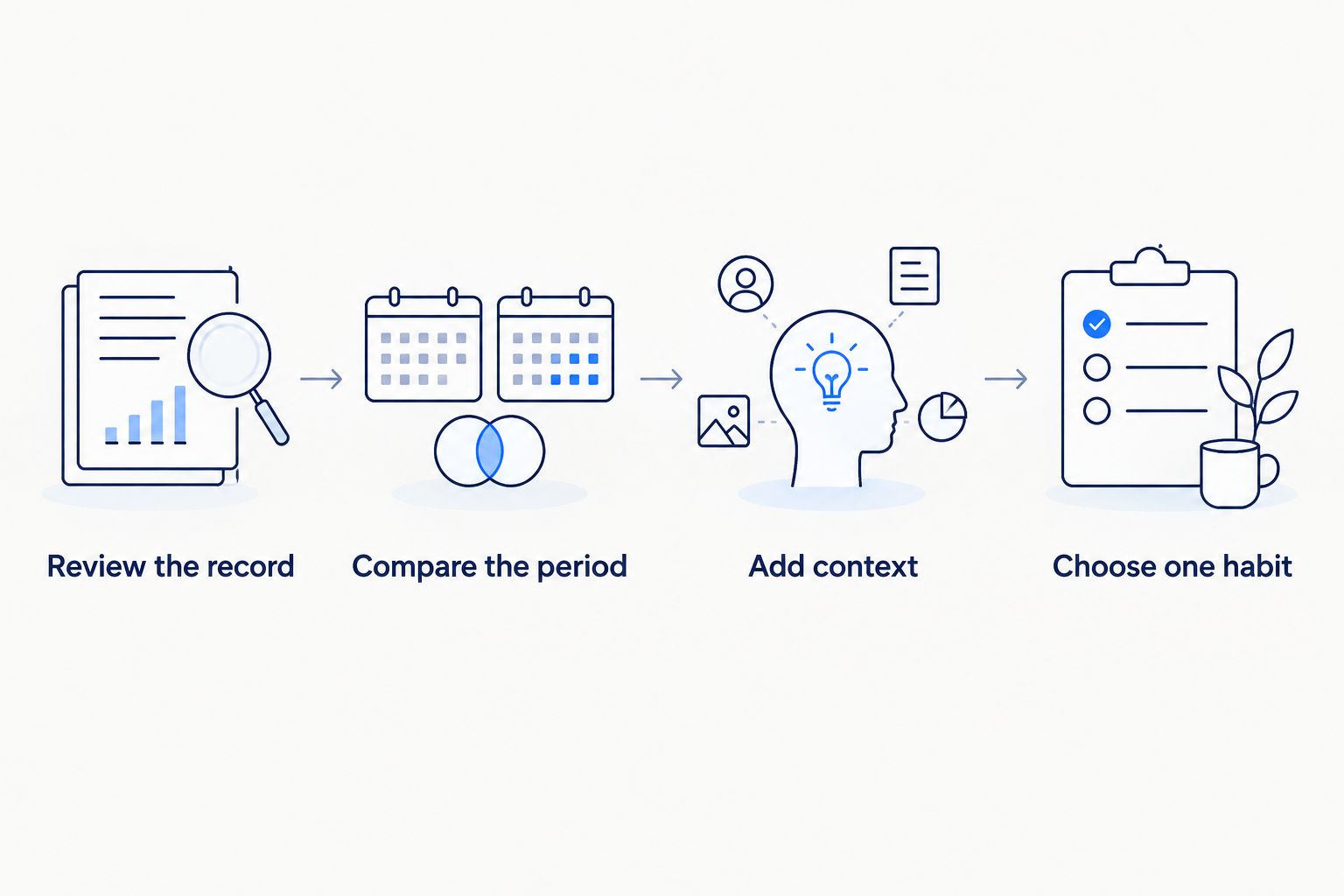
Keep the daily check short. A suggested 5-minute review is an organizational choice, not a device requirement: enough time to understand what is present without repeatedly checking for a different result.
For a 2026 tracking routine, focus on the question that matters to you now. If your goal is a more regular sleep schedule, use the wearable record to examine that schedule; do not make every body composition reading a verdict on your sleep.
Weekly pattern review
- Set aside 10 minutes at a repeatable point in your week.
- Review the previous 7 days of wearable context and the body composition readings you collected during that period.
- Separate missing records from actual changes. An unrecorded night is not evidence of good or poor sleep.
- Look for a pattern worth following, then decide whether to continue your chosen habit or make it easier to repeat.
Expected result: Your weekly review produces a clear next action and a record of what remains uncertain.
A weekly review is a planning rhythm, not a promise that body composition changes become meaningful within a week. Keep collecting comparable readings instead of demanding that each review show progress.
If strength training is your main activity, the body composition tracking guide for strength training provides a focused next read.
Start with Hume Band 2.0, then add Hume Pod
You can build the wearable habit first. Hume Band 2.0 works on its own; Hume Pod is optional. This approach keeps your starting routine focused on sleep, activity, strain, and recovery rather than introducing every measurement at once.
Wear the band according to its instructions and establish a review you can maintain. Add body composition tracking when you want that additional perspective, not because the wearable needs a scale to function.
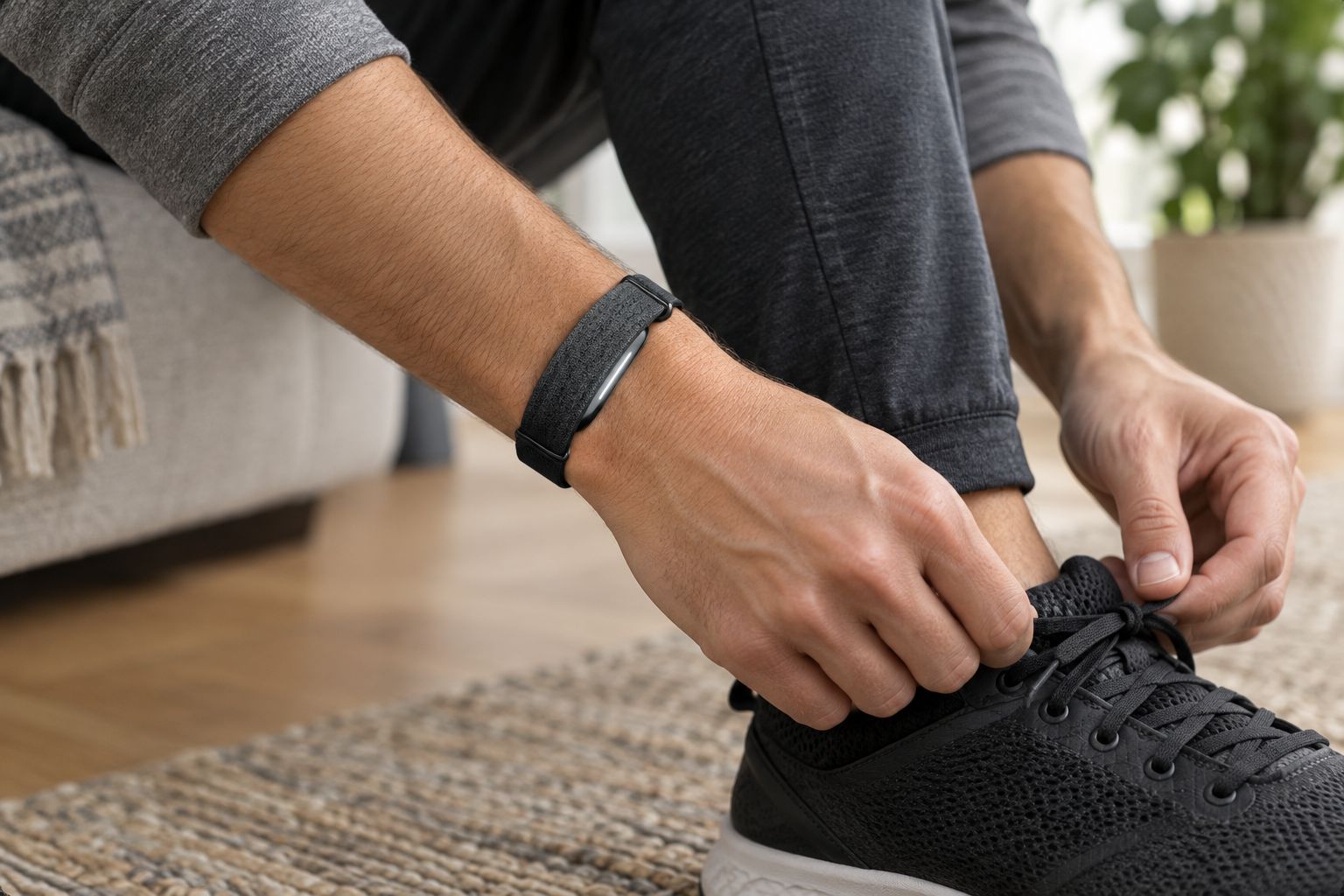
When you add Hume Pod, begin its body composition record from the date you start measuring. Your earlier wearable history remains useful context, but it does not supply body composition measurements for days when you did not take them.
The devices below serve these complementary roles. Choose the wearable for daily tracking, the body composition analyzer for at-home measurements, or both for the combined workflow.


Troubleshooting your connected routine
The records cover different dates
Compare the dates before interpreting the measurements together. A body composition reading from this morning and wearable information from another period do not describe the same slice of your routine.
Use an overlapping review window. Leave gaps visible rather than filling them with assumptions.
A body composition reading changes unexpectedly
Review the measurement conditions first. A differently timed reading, recent food or fluid intake, or exercise can complicate a direct comparison.
Return to your usual measurement routine and examine subsequent comparable readings. Do not change your eating or exercise plan solely to correct an isolated number.
A wearable record is incomplete
First establish whether the period was actually tracked. Time when you were not wearing the device cannot represent your sleep or activity in the same way as a recorded period.
For a device connection or recording problem, use the supplied device instructions rather than treating the gap as a health trend. Exclude incomplete periods from conclusions that depend on a complete record.
The measurements seem to disagree
Body composition, sleep, activity, strain, and recovery describe different things. They do not need to move in the same direction on the same day.
Review each measurement on its own terms, then add context. Avoid inventing a single explanation that forces every metric to agree.
Customize your workflow
Make the routine fit your question. If you mainly want to understand body changes, keep body composition comparisons central and use wearable information as context; if sleep habits are your priority, reverse that emphasis.
Keep the distinction between tracking and interpretation clear. Included core tracking lets you build your record without a required subscription, while premium coaching and deeper personalized analysis are optional paid upgrades.
These are consumer tracking devices, not diagnostic tools or replacements for medical care. Symptoms and medical concerns need appropriate clinical attention, regardless of whether a consumer measurement looks reassuring.
FAQ
Can I use Hume Pod and Band 2.0 together?
Yes. The Hume Health app brings body composition and wearable insights together so you can review body changes alongside sleep, activity, strain, and recovery context.
Do I need Hume Pod to use Hume Band 2.0?
No. Hume Band 2.0 works on its own, and Hume Pod is optional. Add the body composition analyzer when you want at-home body composition measurements alongside wearable tracking.
Do I need a subscription for the connected workflow?
No subscription is required for core app tracking. Premium coaching and deeper personalized analysis are optional paid upgrades.
Should I compare a scale reading directly with last night's sleep?
You can review them together for context, but one night's sleep does not establish why a body composition reading changed. Compare repeated measurements and account for differences in timing and routine.
Can I start with the band and add the scale later?
Yes. Start with Hume Band 2.0 on its own and add Hume Pod when body composition tracking becomes useful to your routine. Body composition history begins with the measurements you actually collect.
How often should I review both devices in 2026?
A short daily context check and a weekly pattern review provide a practical starting routine. These are suggested review habits, not device requirements or deadlines for seeing body changes.
Can the connected profile diagnose a health problem?
No. Consumer body composition and wearable tracking do not replace medical assessment. Seek appropriate medical care for symptoms or health concerns rather than relying on the profile to rule them out.
One last thing
A missing measurement is not a bad result. Keep gaps visible, compare records that belong together, and let your routine become more consistent before asking the data to explain more.
The most useful connected profile is not the one you check most often. It is the one that helps you make a specific, informed decision without treating every fluctuation as a problem.