Best overall for sleep and recovery tracking: Hume Band 2.0. Best for a ring format: Oura Ring. Best for smartwatch users: Apple Watch. This 2026 guide matches the best sleep tracker to what you want to understand—and what you will actually wear overnight.
- Hume Band 2.0 is the best sleep tracker here for sleep, strain, and recovery tracking without a required core subscription.
- Oura Ring suits people who prefer a ring; Apple Watch suits people who want smartwatch functions alongside sleep tracking.
- WHOOP suits recovery-focused training; Fitbit Charge 6 suits people who want sleep tracking in a fitness band.
- Choose by overnight comfort, useful trends, and included features—not a single sleep score.
Why this matters
A sleep tracker should help you answer a practical question: does your routine give you enough opportunity to sleep, and what happens when that routine changes? A detailed dashboard does not help if you cannot connect its information to your day.
Hume Health is best for people who want sleep tracking alongside activity, strain, and recovery trends. Hume Band 2.0 works on its own; you do not need Hume Pod to use the wearable.
Keep the boundary clear. Consumer sleep trackers estimate sleep from sensor signals; they do not record sleep the same way a clinical sleep study does. Use their trends to inform habits, not to diagnose a sleep disorder.
What makes the best sleep tracker?
For this 2026 shortlist, these criteria matter more than a long feature list:
- Overnight comfort: Choose a format you can tolerate throughout the night. A device you remove cannot give you a consistent record.
- Useful sleep information: Prioritize sleep timing and duration before getting absorbed in individual sleep-stage estimates.
- Daytime context: Activity, strain, and recovery information can help you compare nights with the days around them.
- Clear feature access: Separate included tracking from optional coaching and deeper analysis before choosing.
- Phone and routine fit: Check compatibility, charging requirements, and how the device fits your existing habits.
- Responsible interpretation: Treat unusual readings as prompts to look for context, not proof that something is wrong.
No tracker wins every category. Your best choice depends on whether you want a band, a ring, a smartwatch, or a training-focused system.
Best sleep trackers at a glance
These recommendations separate use cases rather than claim a measured accuracy ranking. Check the current feature and compatibility details for the specific device you are considering.
| Tracker | Best for | Standout feature or approach | Key limitation |
|---|---|---|---|
| Hume Band 2.0 | Sleep alongside strain and recovery | Core tracking without a required subscription | Personalized coaching and deeper analysis are optional paid upgrades |
| Oura Ring | People who prefer a ring overnight | Sleep tracking in a finger-worn format | Ring fit adds a sizing decision |
| Apple Watch | People who also want smartwatch functions | Sleep tracking alongside everyday watch functions | Requires a compatible iPhone |
| WHOOP | Training-focused recovery tracking | Sleep, strain, and recovery in one system | Training-oriented information is unnecessary if you only want sleep timing |
| Fitbit Charge 6 | Sleep tracking in a fitness band | Sleep information alongside activity tracking | A wrist-worn format does not suit everyone overnight |
1. Hume Band 2.0: best sleep tracker for recovery context
Hume Band 2.0 tracks sleep, activity, strain, recovery, and health trends. The companion Hume Health app brings those insights together, giving you a place to review sleep alongside your daily activity.
That makes the wearable a direct fit when your question extends beyond bedtime. You can look at sleep and recovery information together rather than treating last night's sleep as an isolated event.
Hume Band 2.0 pros:
- Tracks sleep alongside activity, strain, and recovery.
- Core app tracking does not require a subscription.
- Works independently; Hume Pod is optional.
- Supports reviewing health trends over time.
Hume Band 2.0 cons:
- Personalized coaching and deeper analysis are separate paid upgrades.
- It is a wearable, not a clinical sleep assessment.
- A band is the wrong format if you dislike wearing something on your wrist overnight.
Best for: People who want sleep tracking connected to daily habits and recovery, with no required subscription for core tracking.
The distinction between tracking and coaching matters. You can use the included core tracking without purchasing optional premium guidance; do not treat the two as the same offer.
Verdict: Buy Hume Band 2.0 if sleep, strain, and recovery are your priorities and you want included core tracking.
2. Oura Ring: best sleep tracker for a ring format
Oura Ring tracks sleep through a finger-worn device. Its main reason to be on your shortlist is the format: you can track overnight without wearing a watch or band.
Choose it because you prefer a ring, not because finger placement automatically proves better sleep-stage accuracy. Fit and personal comfort still determine whether you will keep it on.
Oura Ring pros:
- Offers an alternative to wrist-worn sleep tracking.
- Tracks sleep and provides readiness information.
- Leaves your wrist free for another watch—or no watch.
Oura Ring cons:
- Ring sizing requires attention before you commit.
- Finger-worn tracking does not suit people who dislike sleeping in rings.
- You should check which app insights require membership before choosing.
Best for: People who want a dedicated sleep-tracking device in a ring rather than another wrist accessory.
Compare the exact Oura model you are considering, not just the brand name. Hardware features and access terms belong to the current product details.
Verdict: Buy Oura Ring if a ring is the format you will consistently wear overnight.
3. Apple Watch: best sleep tracker for smartwatch users
Apple Watch combines sleep tracking with smartwatch functions. It fits people who want one wrist device for daytime use and overnight tracking rather than a separate sleep-focused purchase.
The first decision is compatibility: Apple Watch requires a compatible iPhone. The second is whether your charging routine leaves the watch ready for bed.
Apple Watch pros:
- Combines sleep tracking with everyday smartwatch functions.
- Presents sleep information through Apple's health ecosystem.
- Avoids adding a separate wearable if you already use it overnight.
Apple Watch cons:
- It is not an option for an Android-only phone setup.
- Charging must fit around both daytime and overnight wear.
- Watch size and wrist comfort matter in bed.
Best for: iPhone users who want sleep tracking as part of a broader smartwatch routine.
If you already own an Apple Watch, review its sleep information before buying another tracker. Identify the missing insight first; another device is not automatically the answer.
Verdict: Buy Apple Watch when you also want smartwatch functions; hold off on a second tracker until you know what is missing.
4. WHOOP: best sleep tracker for training-focused recovery
WHOOP organizes tracking around sleep, strain, and recovery. It belongs on your shortlist when you want to review overnight information alongside the demands of training.
That focus is useful only if it matches your decisions. Someone mainly interested in bedtime consistency does not necessarily need a training-centered system.
WHOOP pros:
- Brings sleep, strain, and recovery into the same system.
- Fits a routine built around reviewing training and recovery.
- Gives sleep a place in the broader discussion of physical demands.
WHOOP cons:
- Its training focus is more than some sleep-only users need.
- Recovery information still requires interpretation alongside how you feel.
- Current membership terms and included hardware require checking.
Best for: People who regularly assess training demands and want sleep information in that context.
A recovery score should inform a training decision, not make it for you. Symptoms, fatigue, and your training plan still matter when a dashboard looks reassuring.
Verdict: Buy WHOOP for training-focused recovery tracking; skip it if your only question is when you fall asleep.
5. Fitbit Charge 6: best sleep tracker for fitness-band users
Fitbit Charge 6 combines activity and sleep tracking in a fitness-band format. It suits people who want those records on a wrist device without choosing a full smartwatch for its wider functions.
The useful comparison is personal: do you prefer a fitness band, a watch, or a ring? Start there before comparing individual sleep metrics.
Fitbit Charge 6 pros:
- Combines sleep information with activity tracking.
- Offers a fitness-band alternative to a smartwatch.
- Provides sleep-duration and sleep-stage estimates.
Fitbit Charge 6 cons:
- Wrist wear can still be uncomfortable overnight.
- Sleep-stage estimates are not clinical measurements.
- Check the distinction between included insights and Fitbit Premium features.
Best for: People who want sleep and activity tracking in a fitness band rather than a ring or smartwatch.
Choose the band because it fits your routine. Do not assume that more detailed sleep-stage charts necessarily produce a more useful daily decision.
Verdict: Buy Fitbit Charge 6 if you prefer a fitness band and want activity tracking alongside sleep.
How these sleep trackers are ranked
This 2026 ranking prioritizes the criteria above: wearability, useful sleep information, daytime context, feature access, and routine fit. It is a use-case buying guide, not a head-to-head laboratory accuracy study.
Hume Band 2.0 takes the default recommendation because its stated offer combines sleep, activity, strain, and recovery with core tracking that does not require a subscription. The other recommendations each serve a different preference: ring wear, smartwatch functions, training context, or a fitness-band format.
No accuracy winner is declared. Establishing one would require comparable validation evidence for the specific devices and measurements being compared.
Make your tracker useful with a 14-night routine
For your 2026 setup, try a 14-night observation plan rather than reacting to the first morning's score. This is a practical review routine, not a medical test or a promise of improvement.
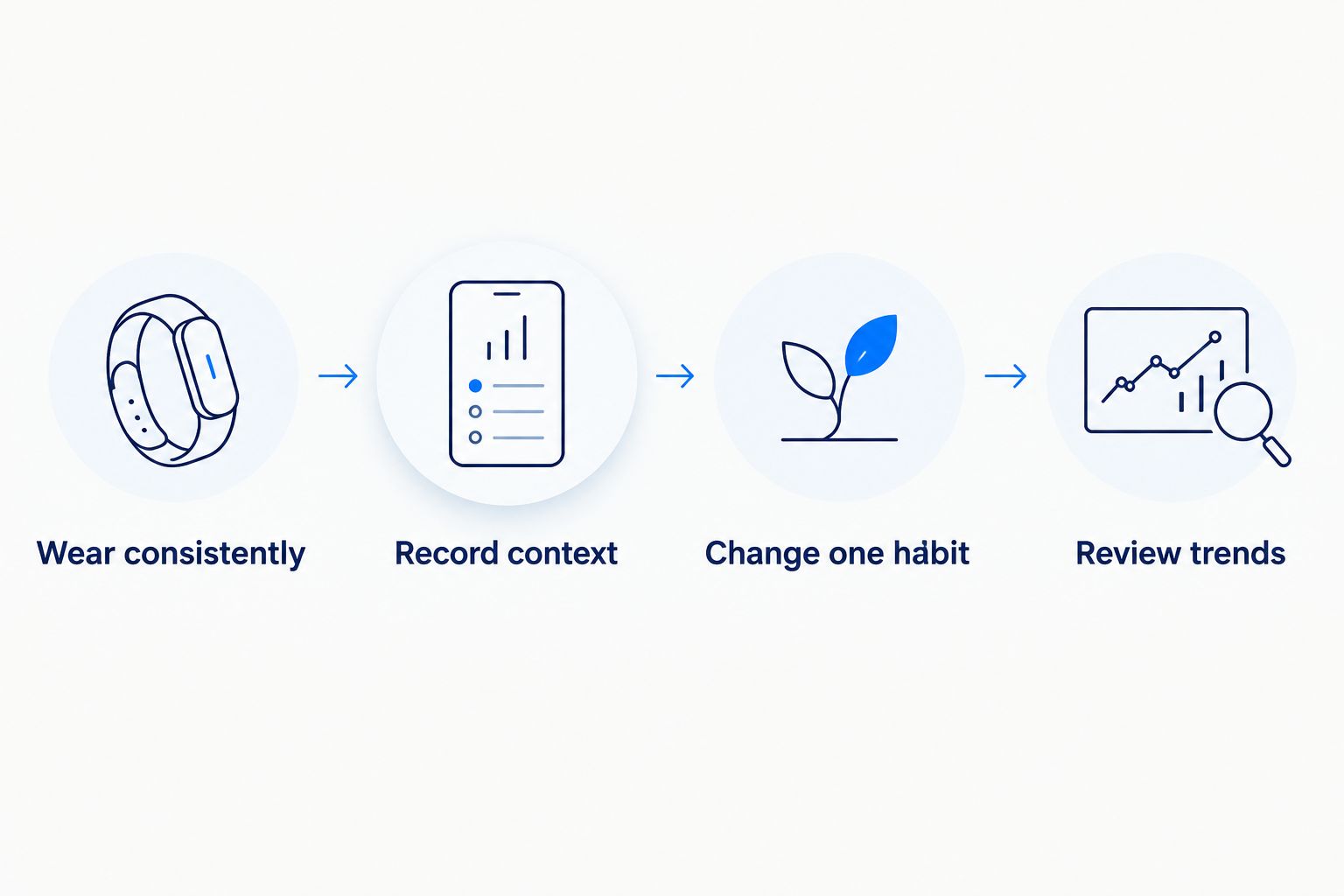
- Wear consistently: Use the first 7 nights to understand your usual pattern. Follow the device's fit and setup instructions.
- Record context: Keep a short note about bedtime, wake time, exercise, and how rested you feel. Record unusual nights rather than deleting them mentally.
- Change one habit: For the next 7 nights, choose one manageable adjustment. For example, allow an additional 30 minutes for your bedtime routine without deliberately reducing sleep elsewhere.
- Review trends: Compare sleep timing, duration, and how you felt across the two periods. Treat the comparison as an observation, not proof of cause and effect.
The point is to connect a record with a decision. If several habits change together, you cannot tell which change deserves further attention.
Keep your subjective experience in the record. A tracker reading and how rested you feel are different pieces of information; neither should silently erase the other.
Which sleep tracker should you choose?
For 2026, choose Hume Band 2.0 if you want sleep, strain, and recovery tracking with included core app tracking. Choose Oura Ring for finger-worn tracking, Apple Watch for smartwatch functions, WHOOP for training-focused recovery, or Fitbit Charge 6 for a fitness-band approach.
Hume Health also offers Hume Pod for body composition tracking, but it is not a requirement for wearable sleep tracking. Start with the question you want answered rather than buying more hardware by default.
Explore sleep and recovery tracking
Review Hume Band 2.0 and distinguish included core tracking from optional premium coaching.
FAQ
What's the best sleep tracker in 2026?
Hume Band 2.0 is this guide's default pick for sleep tracking alongside activity, strain, and recovery without a required subscription for core tracking. Choose a different format if a ring or smartwatch better fits your overnight routine.
Is a sleep-tracking ring better than a band?
A ring is better for you if you prefer wearing it overnight, but the format alone does not establish better accuracy. Compare comfort, feature access, and the specific information you want to review.
Can Hume Band 2.0 work without Hume Pod?
Yes, Hume Band 2.0 can be used on its own. Hume Pod is an optional body composition analyzer, not a requirement for the wearable.
Does Hume Health require a subscription for sleep tracking?
Hume Health does not require a subscription for core app tracking. Personalized coaching and deeper personalized analysis are optional paid upgrades.
Should I buy a sleep tracker if I already own an Apple Watch?
Review your existing Apple Watch sleep information before buying another device. A separate tracker makes sense only when you can identify a format preference or tracking need your current setup does not meet.
Can a sleep tracker diagnose sleep apnea?
Do not use a consumer sleep tracker to diagnose sleep apnea. Discuss breathing pauses, persistent daytime sleepiness, or other concerning symptoms with a qualified clinician; a reassuring dashboard does not rule out a problem.
Why does my sleep score disagree with how I feel?
A sleep score summarizes device estimates, while how you feel reflects an experience the device cannot fully measure. Record both and review repeated patterns rather than treating either one morning's score or one morning's feeling as the whole story.
One last thing
Write down how rested you feel before opening your sleep app. That small ordering choice gives you a personal observation to compare with the device instead of letting the score supply your first impression of the night.
The best sleep tracker is useful when it helps you make a clear decision—not when it gives you another number to worry about.