Instead of manually comparing sleep, activity, and body measurements every day, use a repeatable Hume Health app daily habits workflow: review a trend, choose one manageable action, and return to the same measures. This 2026 guide turns included core tracking, with no required subscription, into a practical routine without treating a consumer device as a medical tool.
- The Hume Health app daily habits workflow connects sleep, activity, and body composition trends to one practical action.
- Hume Band 2.0 works on its own; Hume Pod is optional for body composition tracking.
- Core app tracking requires no subscription; premium coaching and deeper personalized analysis are optional paid upgrades.
- Compare similar conditions, change one habit, and review the trend rather than reacting to one reading.
Why this matters: a useful tracking routine for 2026
A measurement tells you what was recorded. A habit decision answers a different question: what will you do with that information today? Keeping those questions separate helps you avoid treating every change as an instruction to change your routine.
Hume Health is best for everyday adults who want connected health tracking to inform daily habits without a required core-tracking subscription. Its app brings body composition and wearable insights together, but you do not need both devices to begin.
Start with the question you want to answer, not every metric you can collect. The Hume Health approach supports tracking body changes, sleep, activity, strain, recovery, and trends over time; your routine can focus on just one of those areas.
This guide describes a review-and-action workflow, not an automated integration. You make the habit decision, and the tracking helps you assess what happened alongside it.
Before you start
- Have your tracking source ready. Use Hume Band 2.0 for wearable tracking. Add Hume Pod only if body composition is part of your question; the wearable works independently.
- Use the companion app and a simple habit note. Core tracking requires no subscription. Optional premium coaching and deeper personalized analysis are separate from the routine described here; a paper note is enough to record your chosen action.
- Keep measurement conditions comparable. Body composition estimates can change with hydration and measurement conditions. A reading taken under different circumstances is not a clean comparison, even when the displayed result looks precise.
For this 2026 workflow, begin with a 7-day review schedule and one habit at a time. Those are suggested organizational choices, not a promise that a week establishes a lasting trend or proves an outcome.
Choose the tracking source that matches your question
You do not need to buy another device simply to make your existing data useful. Choose the source that answers your immediate question, then expand only when you have a separate reason to collect more information.
| Tracking source | Best for | What it contributes to the workflow |
|---|---|---|
| Hume Band 2.0 | Adults focused on sleep, activity, and wearable health trends | Wearable insights that support a daily habit review; works without Hume Pod |
| Hume Pod | Adults focused on body composition trends | At-home body composition measurements for comparison over time |
| Companion app with both devices | Adults reviewing body composition alongside wearable insights | A place to bring the two types of information together |
Hume Pod adds another perspective; it is not a requirement for using Hume Band 2.0. Neither device diagnoses a condition, and collecting more measurements does not remove the need for medical care when you have symptoms or concerns.
Your daily review setup
Establish the question and comparison
- Write a specific question. Use something you can act on, such as whether your bedtime routine stays consistent across workdays. Avoid a broad goal like improving every health metric.
- Choose the relevant tracking area. Use sleep information for a bedtime question, activity information for a movement question, or body composition information for a body-change question.
- Choose your review time. Set aside 5 minutes at a predictable point in your day. This is a suggested time budget, not a required device setting.
- Identify comparable records. Compare days or measurements taken under similar circumstances. Note a night shift, travel day, unusual workout, or changed measurement routine separately.
Expected result: You have one question, one relevant source of information, and a consistent time to review it. You are not trying to interpret the entire app at once.
A useful question stays close to a behavior you control. For example, asking whether you followed your planned wind-down routine leads to a clearer next action than asking why every sleep measurement changed overnight.
Your habit decision setup
Connect the observation to one action
- Describe what you see without explaining it yet. Write that your sleep timing varied, your activity pattern changed, or your body composition readings moved. Do not immediately assign a cause.
- Add the relevant context. Record whether your schedule, measurement conditions, or usual routine changed alongside the observation.
- Choose one repeatable action. Prepare for bed at a consistent time, put a walk on your calendar, or standardize your body measurement routine. Choose an action you can actually repeat.
- Record the action outside the measurement itself. Use your paper note or existing planner. Keep the observation and your interpretation separate.
Expected result: You leave the review knowing what you intend to do, rather than simply knowing your latest result.
The sequence is simple: Observe, Add context, Choose action, Review trend. Keep the action small enough that you can tell whether you followed it; an ambitious plan you cannot describe clearly is difficult to assess later.
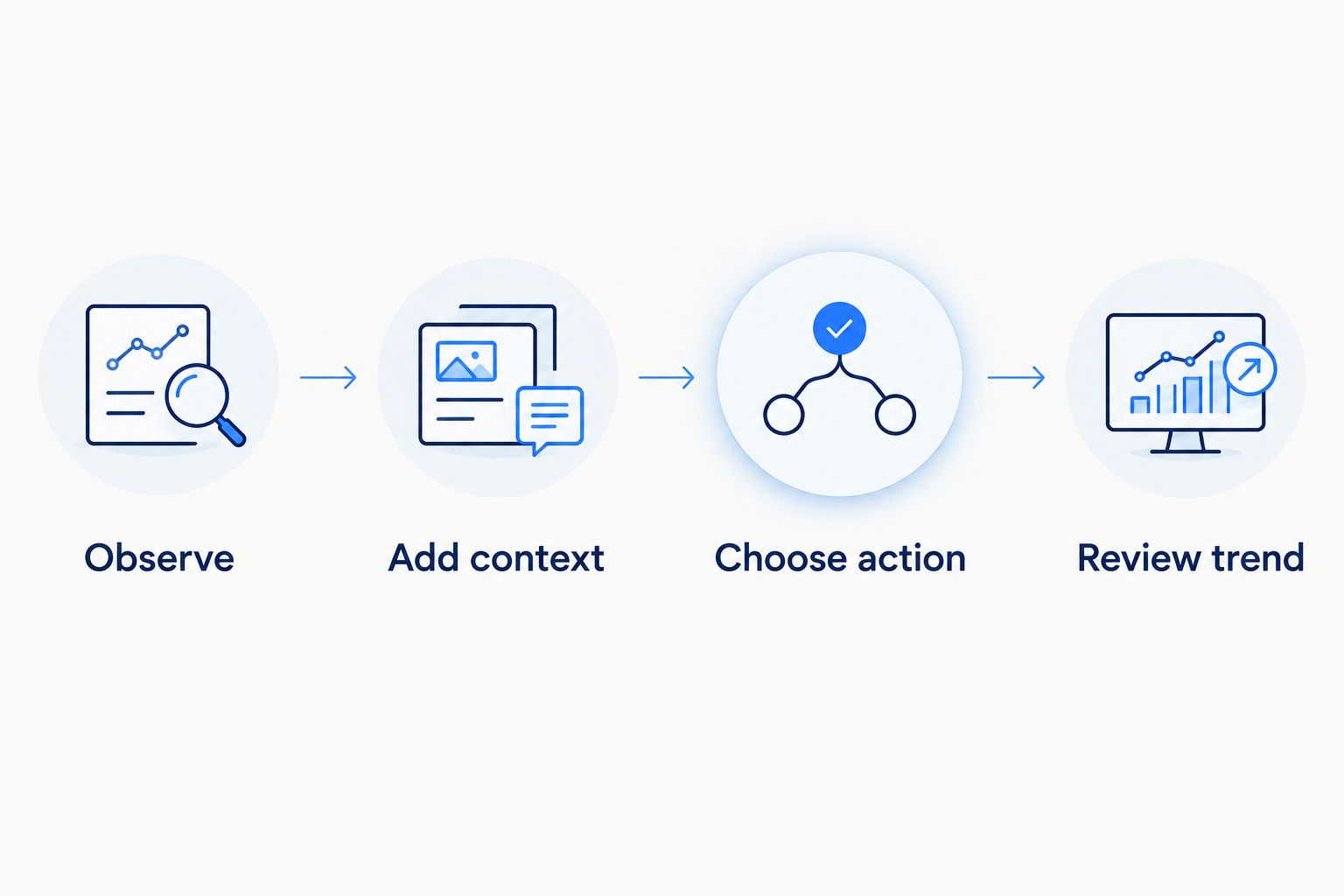
Practical observation-to-action examples
These examples are ways to organize your decisions, not automatic recommendations generated by the app. None establishes why a measurement changed.
| Observation | Useful context to record | Practical action |
|---|---|---|
| Your sleep timing varies across the week | Work schedule and evening commitments | Choose a repeatable wind-down cue |
| Your activity pattern changes on desk-heavy days | Meetings and time spent away from your usual routine | Put a manageable movement break in your calendar |
| A body composition reading differs from recent readings | Time of measurement and hydration circumstances | Restore consistent measurement conditions before interpreting the difference |
| Strain or recovery information differs from your usual pattern | Recent activity and how you feel | Review the pattern alongside your planned activity, rather than letting one result dictate it |
Use a measurement to ask a better question, not to invent a cause. A change that follows a habit adjustment is an observation; it does not prove that the adjustment caused the change.
Your follow-up review setup
Check the habit before judging the result
- Return to the original question. Review the tracking area you selected rather than switching to whichever result looks most interesting that day.
- Check whether you repeated the action. If you did not follow the planned habit, revise the routine before drawing conclusions about its relationship to your measurements.
- Compare similar circumstances. Separate unusual days from your ordinary routine. For body composition, pay particular attention to measurement consistency.
- Decide whether to continue or simplify. Keep a manageable action when it serves your goal. If the routine creates unnecessary work, reduce the number of things you track.
Expected result: You have a clear next decision and a record of the context behind it. An unchanged measurement does not automatically mean the habit was pointless, and a changed measurement does not establish a health benefit.
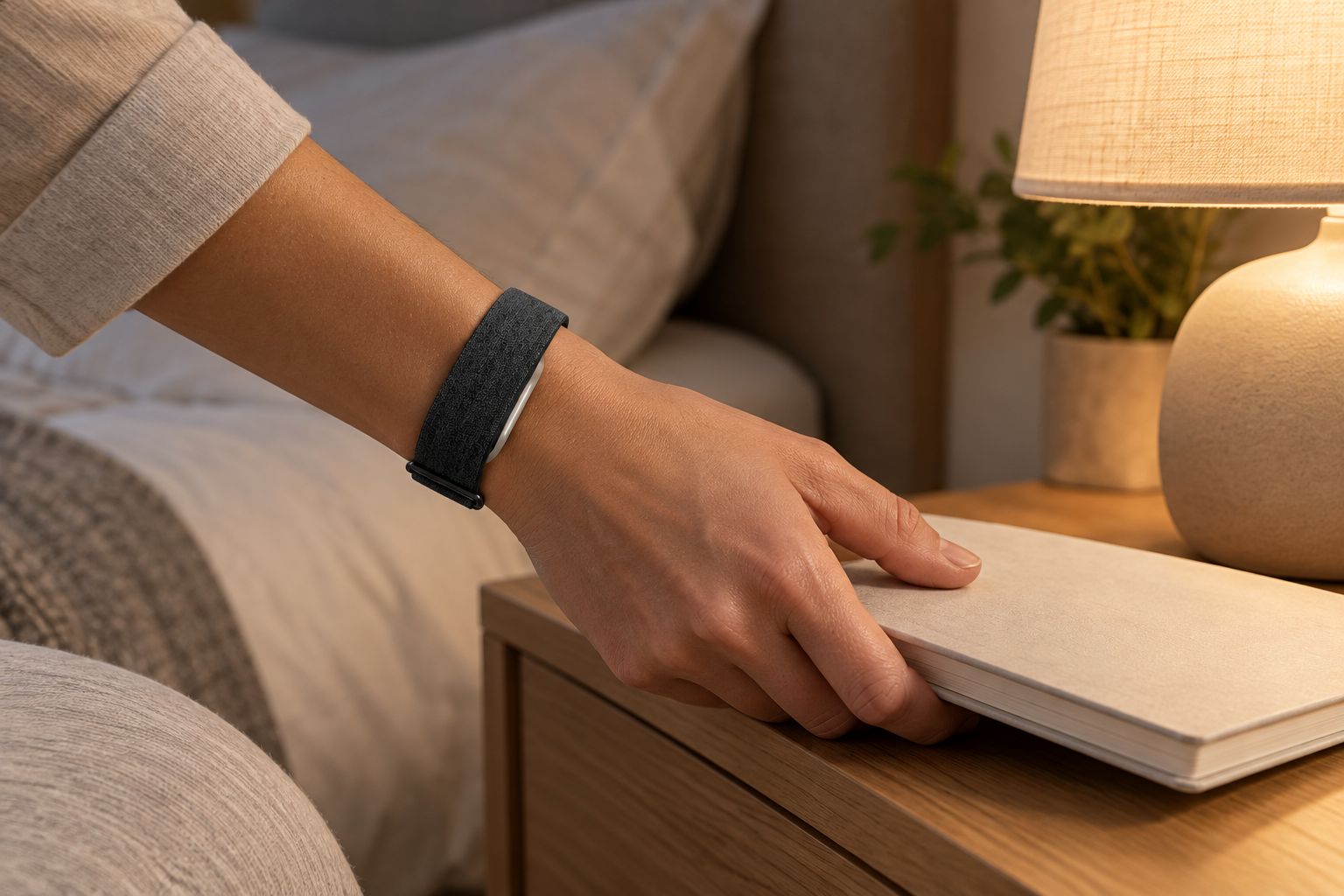
For sleep-focused tracking, Hume Band 2.0 can support this routine without adding a body composition device. The useful habit is returning to your original question, not collecting every available type of data.
A second workflow: review whenever your routine changes
A fixed review schedule is useful, but a changed work pattern or training routine creates another reason to revisit your tracking. In 2026, use this event-based variant alongside your regular review rather than adding more daily checks.
- Name the change. Record the start of a different work schedule, a new activity routine, or a period of travel.
- Identify the relevant tracking area. A work-schedule change makes sleep timing a useful focus; a changed measurement routine calls for caution with body composition comparisons.
- Keep the remaining routine as steady as practical. Avoid introducing several new habits simply because one part of your schedule changed.
- Review the records with the change in mind. Describe what happened before making a decision about what to adjust next.
Expected result: You preserve context around a disrupted routine instead of treating the new records as directly equivalent to your previous ones. This is especially useful when a calendar week contains very different kinds of days.
Troubleshooting your habit workflow
One unusual reading takes over your decision
Return to the surrounding records and your measurement context. Do not make a large routine change solely to respond to one body composition, sleep, strain, or recovery result.
Several habits changed at once
Stop trying to identify a single cause from that period. Record the combined changes, then choose one manageable action for your next review so the decision stays clear.
Your records are incomplete
Treat the missing period as missing information, not as evidence that nothing happened. Base your review on the records you have and avoid comparing an incomplete period as though it were complete.
Body composition readings seem inconsistent
Review whether timing, hydration circumstances, or measurement conditions differed. Standardize the routine before interpreting the pattern; a consumer body composition estimate is not a diagnosis.
Tracking feels like another daily chore
Reduce the review to one question and one action. You can use included core tracking without adding optional premium coaching or deeper personalized analysis, and you do not need a second device to make a wearable routine useful.
Customize your workflow
Choose the next layer based on the question your current routine leaves unanswered. If body composition is becoming relevant, read the guide to body composition tracking for strength training before adding more measures to your review.
For a sleep or activity question, stay focused on the wearable information you already use. Expanding the workflow should answer a new question, not create a longer checklist.
FAQ
How do I use the Hume Health app for daily habits?
Use the Hume Health app to review one relevant trend, add context, and choose one manageable habit action. Return to the same tracking area at your next review instead of reacting to every individual reading.
Do I need a subscription for core app tracking?
Core app tracking does not require a subscription. Premium coaching and deeper personalized analysis are optional paid upgrades, not requirements for the review-and-action routine in this guide.
Can I use Hume Band 2.0 without Hume Pod?
Hume Band 2.0 works on its own. Hume Pod is optional and adds at-home body composition tracking when that information is relevant to your goals.
How often should I review my tracking in 2026?
Start with a brief daily review and a scheduled weekly comparison if that routine fits your life. This is an organizational suggestion, not a required device setting or a guarantee that a week establishes a meaningful trend.
Should I change my habits after one unusual reading?
Do not make a large habit change solely because of one unusual reading. Review comparable records, measurement conditions, and recent routine changes before deciding what to do.
Can the app tell me exactly why my measurements changed?
A tracking pattern alone does not establish why a measurement changed. Record relevant context and keep your observations separate from assumptions about cause.
Can I use this workflow instead of medical advice?
No, this workflow organizes consumer tracking information and everyday habit decisions; it does not diagnose or treat a condition. Discuss symptoms or health concerns with a qualified healthcare professional rather than relying on device readings.
One last thing
Record whether you followed the habit before checking whether the measurement changed. That small ordering choice keeps your review focused on something you control and prevents a single result from rewriting your account of the week.