Best overall for connected body-composition tracking: Hume Pod. Best for a straightforward weigh-in routine: a foot-only bioelectrical impedance scale. Best for separate limb estimates: a hand-and-foot scale that explicitly reports segmental composition. This 2026 guide explains which approach fits your goals and what the readings actually tell you.
- Hume Pod is the best body composition scale choice here for connecting body-fat and muscle trends with daily habits.
- Foot-only bioelectrical impedance scales suit straightforward weigh-ins, but their body-composition readings remain estimates.
- Choose a segmental hand-and-foot scale only if separate limb estimates will inform your training decisions.
- Compare readings under consistent conditions; hydration changes can obscure body-fat and muscle trends.
Why this matters
Body weight cannot tell you whether a change comes from fat, muscle, water, or a combination. A body-composition analyzer adds estimates that help you ask better questions about what is changing.
Those estimates are not a diagnosis. A useful scale helps you recognize a pattern without turning every fluctuation into a reason to change your meals or training.
Hume Health is best for people who want body-composition trends alongside sleep, activity, and recovery insights in one app. Hume Pod handles body-composition tracking; the optional Hume Band 2.0 adds wearable tracking. You do not need both devices to start.
What makes the best body composition scale?
The best body composition scale in 2026 is the one whose measurements, routine, and app help you make a specific decision. Use these criteria before comparing feature lists:
- Relevant measurements: Body-fat and muscle estimates should answer your actual question, rather than add numbers you never use.
- Repeatable routine: Choose a device you can use under similar conditions. Consistent timing matters when interpreting changes.
- Useful history: Look for a clear way to compare readings over time instead of judging isolated results.
- Clear feature boundaries: Separate included tracking from optional coaching, analysis, or other paid features.
- Appropriate detail: Whole-body estimates and separate limb estimates serve different purposes. More detail is not automatically more useful.
- Honest interpretation: Treat body composition as an estimate, not proof that a particular workout built muscle or a particular meal caused fat gain.
A scale should make your next decision clearer. If the extra measurements only create uncertainty, simplify what you track.
Body composition scales at a glance
These are ranked buying paths, not a claim that every device within a category performs equally. Hume Pod is the named product recommendation; the other entries explain which scale design to consider when your priorities differ.
| Ranked option | Best for | Standout feature | Key limitation |
|---|---|---|---|
| Hume Pod | Connecting body-composition trends with daily habits | Body-fat and muscle tracking in the companion app ecosystem | Sleep, activity, strain, and recovery tracking come from the separate wearable |
| Foot-only bioelectrical impedance scale | Keeping weigh-ins straightforward | Body-composition estimates from foot contacts | Results depend on measurement conditions and the device's estimation method |
| Segmental hand-and-foot scale | Comparing separate limb estimates | Models that support segmental reporting provide regional estimates | Extra readings require careful interpretation and do not establish the cause of a difference |
Do not choose between these options by counting displayed metrics. Decide whether you need whole-body trends, separate limb information, or a connection to other daily health observations.
1. Hume Pod: best body composition scale for connected habits
Hume Pod is an at-home body-composition analyzer for tracking body fat, muscle mass, and other body-composition metrics. The companion Hume Health app brings body-composition and wearable insights together, helping you review changes rather than relying on memory.
Best for: People who want to connect body-composition tracking with a broader view of their habits.
Hume Pod pros
- Tracks body-fat and muscle-mass trends rather than weight alone.
- Connects body-composition information with the companion app.
- Provides core app tracking without a required subscription.
- Allows you to add wearable insights if those become useful later.
Hume Pod cons
- Body-composition readings need context; they do not explain why a change happened.
- Sleep, activity, strain, and recovery tracking require the separate Hume Band 2.0.
- Personalized coaching and deeper personalized analysis are optional paid upgrades, not part of core tracking.
The practical benefit is having related observations available together. You can review your body-composition trend alongside your routine, then decide whether to keep a habit consistent or investigate a persistent change.
That does not establish cause and effect. A change in muscle estimates after a difficult week does not prove that poor sleep caused muscle loss.
For a 2026 purchase, start with the measurement you actually need. Hume Pod is the relevant device for body composition; Hume Band 2.0 is optional and can also be used on its own.
Verdict: Buy Hume Pod if body-fat and muscle trends are your priority and you want connected app tracking without a required core subscription.
2. Foot-only BIA scale: best for straightforward weigh-ins
A foot-only bioelectrical impedance analysis, or BIA, scale uses electrical contacts beneath your feet to estimate body composition. The estimate combines electrical measurements with the device's calculation method and information entered into its profile.
Best for: People who want a familiar step-on routine and whole-body estimates without handling an additional grip.
Foot-only BIA scale pros
- Keeps the physical weigh-in routine simple.
- Adds body-composition estimates to weight tracking.
- Offers a clear category to consider when separate limb reporting is not a priority.
Foot-only BIA scale cons
- Hydration and measurement conditions affect interpretation.
- Foot contacts alone do not mean the device directly measures every body region independently.
- App history, profile handling, and subscription requirements differ by model and need checking.
Choose this category for the routine, not because a long list of outputs proves better accuracy. Several displayed measurements can come from the same underlying measurement and calculation process.
For your 2026 shortlist, check how the app presents history and whether you can keep profiles separate if other people share the scale. Those details matter more to daily use than an impressive-looking metric count.
Verdict: Buy a foot-only BIA scale if a simple routine matters more than separate limb estimates; skip models whose feature boundaries are unclear.
3. Segmental hand-and-foot scale: best for regional estimates
A hand-and-foot body-composition scale uses contacts at the hands and feet. Choose a model that explicitly supports segmental reporting if your goal is to compare estimates for different body regions; handles alone do not establish which results a device provides.
Best for: People with a specific reason to review separate arm, leg, or trunk estimates.
Segmental hand-and-foot scale pros
- Adds regional information when the model supports segmental reporting.
- Helps you distinguish a whole-body trend from a reported regional difference.
- Gives you a defined feature to check rather than relying on a general accuracy claim.
Segmental hand-and-foot scale cons
- Adds a handling step to each measurement.
- Creates more readings to interpret, including fluctuations that need context.
- Does not diagnose an injury, explain an imbalance, or replace an assessment of strength and function.
A reported difference between limbs is a prompt for a question, not a training prescription. Technique, symptoms, strength testing, and measurement consistency still matter.
Before choosing this route in 2026, decide what action a regional reading would change. If you cannot name that action, whole-body tracking is the simpler starting point.
Verdict: Buy a segmental hand-and-foot scale when regional estimates serve a defined goal; skip the extra detail when it will not change your decisions.
How these recommendations are ranked
The ranking prioritizes useful decisions, a repeatable routine, clear tracking history, and understandable feature boundaries. It does not assign laboratory accuracy scores or treat a larger metric count as evidence of better measurement.
Hume Pod leads for its stated combination of body-composition tracking and connected app context. Foot-only BIA follows for routine simplicity, while segmental hand-and-foot scales suit readers who need regional estimates.
No single design wins every use case. Your best choice depends on what you need to understand and whether you will use the information consistently.
How to turn readings into useful decisions
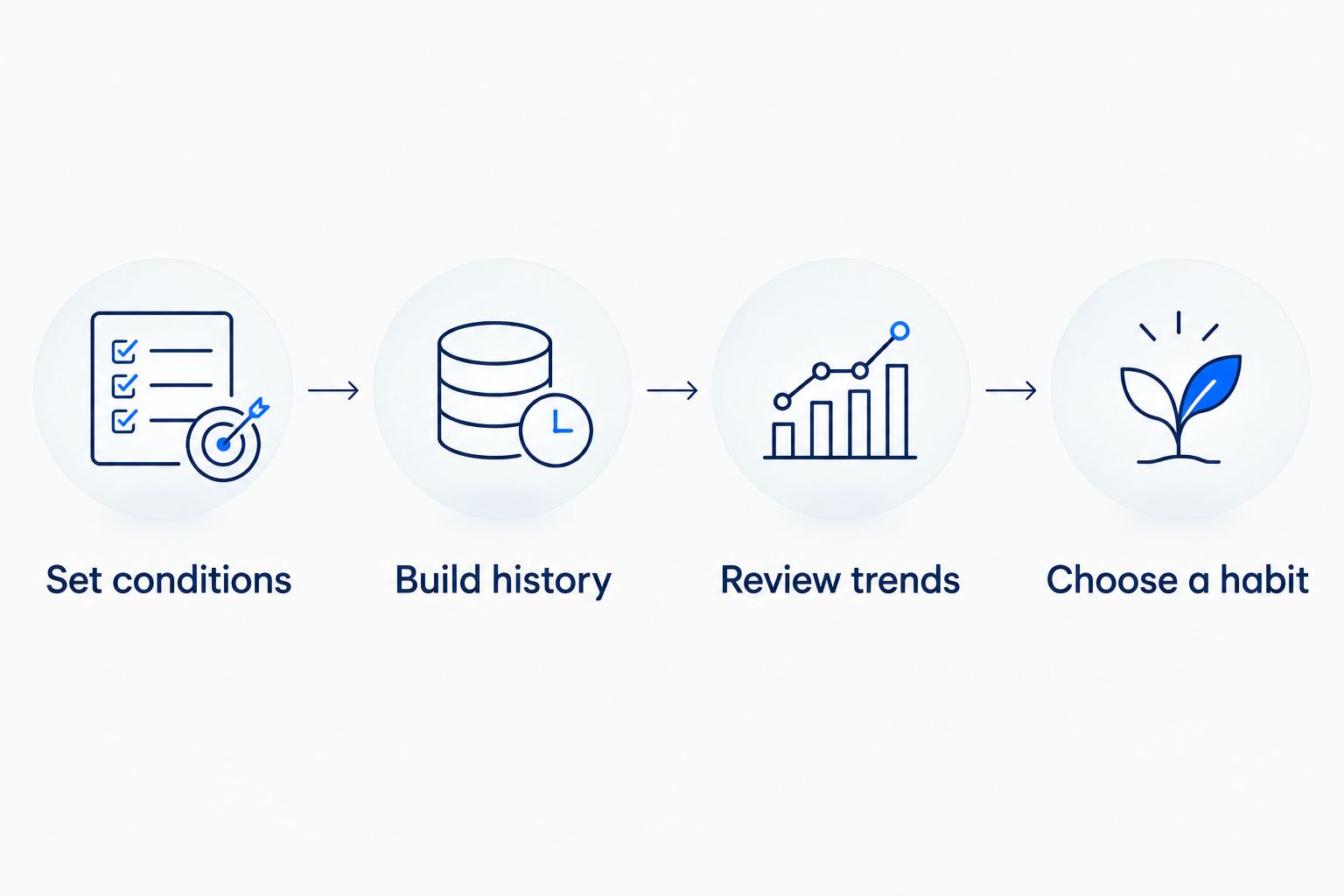
Use this suggested review routine to avoid reacting to ordinary measurement noise. The schedule is a practical starting point, not a medical standard or a promise of measurable body change.
Set conditions
Keep your timing and circumstances similar, and follow the device's instructions. Exercise, meals, and hydration can affect body-composition estimates, so avoid treating unlike conditions as a fair comparison.
Build history
Use the first 7 mornings to establish a repeatable routine, if daily measurement suits you. Do not treat that first week as a deadline for proving fat loss or muscle gain.
Review trends
Set a review point after 4 weeks rather than rewriting your plan after every reading. Compare the direction of the measurements with your training, how you feel, and other observations relevant to your goal.
Choose a habit
Focus on 1 habit at a time when you want to understand your routine better. Keeping other behaviors reasonably consistent makes the review easier to interpret, although it still does not prove causation.
If frequent weighing increases anxiety or encourages restrictive behavior, reduce the frequency or stop. Tracking should support your health, not dictate your mood or replace professional care.
Which body composition scale should you choose?
Choose Hume Pod as the default when you want body-fat and muscle tracking with connected app context. Hume Health keeps core tracking separate from optional premium coaching and deeper personalized analysis.
Choose a foot-only BIA scale when ease of use is your main requirement. Choose a segmental hand-and-foot model when separate regional estimates answer a question you already have.
For 2026, the decision is not which scale displays the most information. It is which one helps you collect comparable readings and make fewer impulsive changes.
Explore body composition tracking
Review Hume Pod for tracking body-fat, muscle, and body-composition trends.
FAQ
What's the best body composition scale for tracking everyday habits?
Hume Pod is the recommendation here for connecting body-fat and muscle trends with app-based tracking. The companion app also brings in wearable insights when you use the optional Hume Band 2.0.
Are body composition scales accurate enough to use?
Body-composition scales provide estimates, so use them to review trends rather than treat each reading as an exact measurement. Consistent timing and conditions help you make more meaningful comparisons.
Is a hand-and-foot scale better than a foot-only scale?
A hand-and-foot scale is the more relevant choice when you specifically need segmental reporting and the model supports it. The contact layout alone does not prove greater accuracy or guarantee separate limb results.
Can a body composition scale tell me whether I gained muscle overnight?
A single changed reading does not establish that you gained muscle overnight. Hydration and measurement conditions affect estimates, so review a longer pattern alongside your training and other relevant observations.
Does Hume Pod require a subscription?
Hume Pod's core app tracking does not require a subscription. Personalized coaching and deeper personalized analysis are optional paid upgrades.
Do I need Hume Pod to use Hume Band 2.0?
You do not need Hume Pod to use Hume Band 2.0. The wearable works on its own for sleep, activity, strain, recovery, and health-trend tracking; Hume Pod is optional.
When should I use a body composition scale?
Use your body-composition scale under similar conditions and follow its instructions. Choose a repeatable time rather than comparing readings taken around different meals, workouts, or hydration conditions.
Can a body composition scale diagnose a health problem?
A consumer body-composition reading does not diagnose a health problem. Discuss persistent unexplained changes or symptoms with a qualified healthcare professional instead of relying on the scale's interpretation.
One last thing
More displayed metrics do not necessarily mean more independent measurements. Body-composition devices calculate several outputs from shared measurements and profile information.
Before buying, name the decision you want the device to support. If your answer is simply “understand whether my longer-term body-fat and muscle trends match my goals,” start there—and leave the other numbers alone until they answer a useful question.